
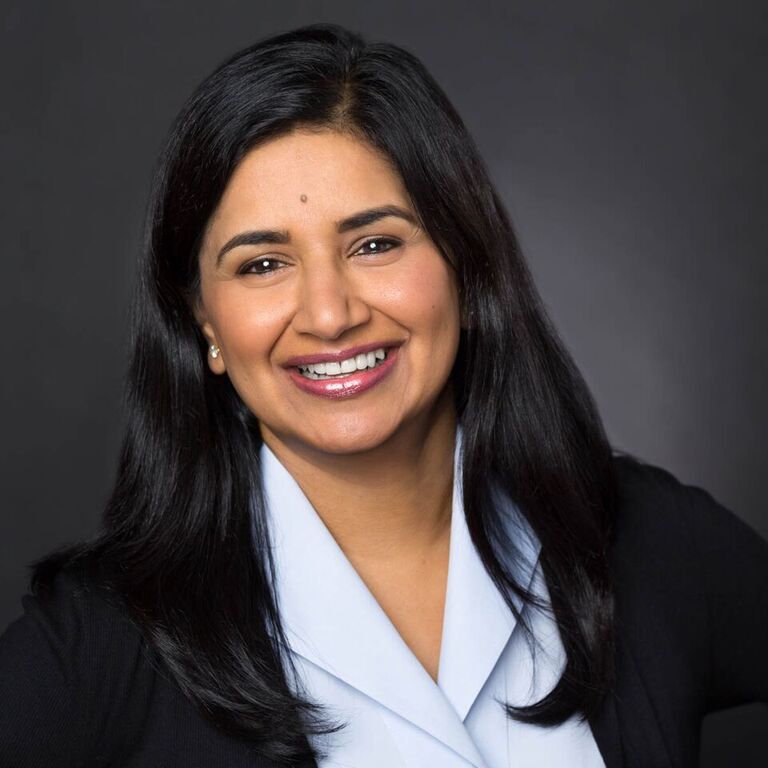
Sundari Mitra, CEO and co-founder of Asato.AI, is a seasoned leader with extensive experience as a three-time CEO. At Asato she is revolutionizing enterprise IT management by empowering CIOs with AI-driven insights to optimize technology, talent, and innovation.
Previously, Sundari was the Chief Incubation Officer at Intel Corporation, leading
disruptive innovation and the next $10B opportunity. Before that, she was Corporate Vice President and General Manager of the IP Engineering Group (IPG) at Intel where she led a
7,000 – person team focused on developing best-in-class IP powering $75B of Intel revenue
across multiple market segments.
As Founder and CEO of NetSpeed, she built a global company that transformed SoC design for the world’s leading semiconductor companies before an acquisition by Intel. She has a demonstrated track record of leading transformative strategies and building great engineering and go-to-market teams in both large and small companies and brings her experience in vision, strategy, technology and
market development to the companies and leadership teams she works with.Sundari Mitra, CEO and cofounder of Asato.AI, is a seasoned leader with extensive experience as a three-time CEO. At Asato she is revolutionizing enterprise IT management by empowering CIOs with AI-driven insights to optimize technology, talent, and innovation.
Previously, she was the Chief Incubation Officer at Intel Corporation, leading disruptive innovation and the next $10B opportunity. Before that, she was Corporate Vice President and General Manager of the IP Engineering Group (IPG) at Intel where she led a 7,000 – person team focused on developing best-in-class IP powering $75B of Intel revenue across multiple market segments.
As Founder and CEO of NetSpeed, she built a global company that transformed SoC design for the world’s leading semiconductor companies before an acquisition by Intel. She has a demonstrated track record of leading transformative strategies and building great engineering and go-to-market teams in both large and small companies and brings her experience in vision, strategy, technology and
market development to the companies and leadership teams she works with.
M.R. Rangaswami: What were you noticing that was happening in the market that made you create Asato?
Sundari Mitra: Asato was born out of a problem I faced firsthand at Intel, after my previous startup was acquired. I found myself responsible for thousands of engineers and vast IT assets spanning infrastructure, code, and data that was spread across global teams, all under tight budget constraints.
The issue wasn’t lack of data. It was the lack of Insights based on the data that was presented to me. I couldn’t easily answer fundamental questions like: What do we own? How is it being used? Are we getting the expected ROI? Despite having access to tools and dashboards, I lacked a clear, connected view of the organization’s assets. Decision making was slow and often based on incomplete information.
I envisioned a system that could help leaders like me observe their environment, orient around goals, decide with clarity, and act – then close the loop by tracking outcomes. The classic OODA loop. In early 2023, with the rise of GenAI and more mature tech stacks, I saw an opportunity to build such a system for leaders of IT organizations.
Through market research and conversations with CIOs, the hypothesis was validated. Teams were struggling with siloed systems, limited visibility on Saas and IT sprawl, difficult to interpret contracts and renewals, all making it very complex to make decisions.
So, we created Asato: a business observability platform built for CIOs. It unifies data, insights, decision-making, and outcome tracking in one place, all accessible through natural language interfaces, enabling leaders to finally run their IT organization with confidence and clarity.
M.R.: How does the Asato approach fundamentally differ from traditional IT management and monitoring solutions?
Sundari: Traditional IT tools are built to keep infrastructure running; they track uptime, performance, compliance, and alert you when something breaks or drifts. They’re reactive by design. What they don’t do is connect those signals in a way that helps leaders make strategic, data-driven decisions.
At Asato, we take a very different approach. We start with a mindset shift: instead of just monitoring systems, we focus on helping organizations actively manage and optimize their entire technology landscape.
We build a living map of a company’s digital footprint – everything from applications, licenses, and user access to vendor relationships and cost centers. And we enrich that map with real-time data from systems like SSO tools, billing platforms, usage analytics, contracts, and finance systems.
That full picture lets us go beyond surface-level monitoring. Traditional tools stop at logs and alerts. Asato goes further to analyze the relationships within the organization’s tech stack to surface inefficiencies and risks that typically go unnoticed. Asato identifies hidden inefficiencies: duplicate tools, underused contracts, misaligned licensing. What used to be static reporting becomes a dynamic decision layer.
We believe IT should be managed like a portfolio, every dollar should serve a purpose and deliver value. With Asato, CIOs and their partners in finance and procurement gain visibility and context needed to align technology investments with business outcomes. It’s about shifting from reactive firefighting to proactive, outcome-driven leadership.
M.R.: Traditional IT dashboards struggle with complex business questions like “Which teams are driving our software costs?” or “Why are we paying for licenses that aren’t being used?” How does your platform go beyond basic monitoring to answer these nuanced questions that CIOs need answered?
Sundari: This is exactly the gap we set out to close. Most dashboards tell you what is happening in your environment. Asato is built to help you understand why it is happening, who is driving it, and what you can do to optimize it.
Take licensing for example. Traditional tools might show how many licenses you’ve purchased and how many are in use. We go deeper and map each license to a real user, their team, the cost center funding it, and actual usage patterns. That way, leaders don’t just see what they’ve bought, they understand how it is being used and where there is waste.
On the spend side, we track much more than just what was paid. Asato tracks each application’s renewal timeline, the contract owner, and utilization benchmarks. We align procurement documents such as POs, contracts, invoices and flag anomalies, like invoices without matching POs or PO overages beyond contract terms. This makes it easy to catch overspend, spot renegotiation opportunities, and benchmark cost against value. We also flag renewals that are coming up, spot contracts that could be renegotiated, and benchmark costs against usage to expose hidden optimization.
Our users – CIOs, CFOs, Procurement leaders, all come to us with cross-functional questions: Can we consolidate redundant tools? Where is spend overlapping across departments? What’s our true cost per active user by business unit? These are questions traditional dashboards can’t answer because they don’t connect usage, contracts, ownership, and cost in one place.
Our mission is to turn scattered operational data into clean, decision-ready intelligence that leaders can trust. Instead of getting lost in static reports and dashboards, they gain the insights they need to drive smarter, faster and more strategic decisions about their entire digital environment.
M.R. Rangaswami is the Co-Founder of Sandhill.com