
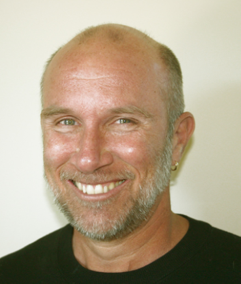
Tom Hogan was Oracle’s first Creative Director, developing the marketing programs, including ORACLE Magazine and Oracle Open World, that distinguished the company in its early days.
After Oracle he migrated to the VC world as the founder of Crowded Ocean, a small agency that specialized in launching startups (51 launched, 17 going public or being acquired.) He now lives in Austin, TX, where he writes novels and screenplays full-time. His novel about the startup life in Silicon Valley, The Forever Factor, has just been released.
We hope you enjoy this conversation with Tom as much as we did.
MR: You helped launch more than 50 startups as a founder of Crowded Ocean. Now you’re the author of a novel set inside the startup world and looks at the role of VCs. What was the inspiration for this book?
Tom Hogan: Ever since I left Silicon Valley and Crowded Ocean, people would ask when I was going to write a book about the tech world—specifically about Silicon Valley and the startup world. They would say that the only people who got it right were the team that created Silicon Valley, the HBO series.
There have been some excellent first-person accounts of life at a startup, so I didn’t think the world was desperate for another. So I decided if I did it, I’d want to take the same approach as when I wrote The Devil’s Breath, my novel about the Holocaust. Rather than hit the reader over the head with another non-fiction account of camp life by survivors and liberators, I made Auschwitz a setting for a murder mystery, rather than the star of the show. It’s the same with this latest novel, The Forever Factor: readers will learn a lot about the Valley and startups, but within the context of a suspense thriller about biohacking and the quest to live forever.
MR: What are the key points you want readers to take away from this book?
Tom: First off, it’s that we’re much further along the road to achieving major changes to how long we’ll live. It’s been said that “the first person to live to 200 has already been born.” If we’re not there already, we’re close.
Second, it’s that, while the Valley continues to develop world-changing technologies and treatments, it’s not that receptive to change. It’s still a boy’s club and points to its major successes as evidence that its models and attitudes are on target. They’re comfortable that 90+ percent of its startups fail in their first two years, with their major wins covering those failures.
Third, I was amazed, once I started my research, at how many individuals have made ‘biohacking’ a major part of their lives. It’s not just the fasts and supplements and implants—it’s also their willingness to be their own guinea pigs.
MR: What’s the difference between a technology startup—which is where Crowded Ocean focused—and a science startup?
Tom: That’s a great question, and if I’d thought about it ahead of time, I might have saved myself some headaches by sticking to the more familiar tech world. But the longevity angle meant the startup needed to be a science-based biotech company.
The differences between the two are stark, especially from a VC perspective:
- Funding: Biotech startups require significantly more upfront capital due to the high cost of research and lab setup. While a tech company might be happy with just laptops, cloud services, and basic office space, a biotech startup needs specialized facilities—think wet labs and clean rooms—and expensive equipment costing millions of dollars. Shared lab spaces can reduce some of these capital expenses, but establishing and running a lab is expensive.
- Time to revenue: Tech companies can create products quickly, often developing an MVP in months. Biotech companies can face development cycles of years, even decades, having to pass clinical trials and regulatory approval before they start generating revenue.
- Culture: Tech startups’ famous “move fast and break things” ethos doesn’t cut it in the biotech world. Science doesn’t always work as planned. Failure, or at least roadblocks and dead ends, are par for the course. Plus, you can’t “break things” when human health is involved.
- Leadership: Biotech startups require specialized scientific talent, including molecular biologists, chemists, and other experts that are harder to find than the engineering and product development expertise of tech startups. Biotech companies typically have PhDs, MDs, or both in leadership roles.
- Risk profile: Tech startups primarily face market adoption risk (will people use it?). Biotech startups face scientific risk (will the science work?), clinical risk (will it work in humans?), and regulatory risk (will it be approved?) before they even get to the market adoption risk.
- Exit strategies: Tech startups aim for rapid growth leading to an IPO or big acquisition. Because of the research and regulatory burdens, biotech firms rarely have IPOs. Acquisitions for healthcare biotech firms often come earlier in their lifecycle, usually by a big pharma company.
To sum up, investors looking for success in the biotech realm better be prepared to have the necessary scientific expertise, deep pockets, and long-term horizons. It’s a whole different world than tech startup investing.
M.R. Rangaswami is the Co-Founder of Sandhill.com